
How to Transition from Dermal Fillers to Cosmetic Acupuncture
Updated: Mar 30

Key Takeaways
Transitioning from dermal fillers to cosmetic acupuncture requires understanding the waiting periods and gradual steps involved in shifting to
natural anti-aging methods
MRI studies show that HA fillers can persist in tissue for 5 to 15 years, far longer than the 6-18 months typically advertised
Facial cupping and acupuncture work through mechanotransduction, which activates your own fibroblasts to produce collagen rather than injecting synthetic materials
Why People Are Moving Away from Dermal Fillers to Cosmetic Acupuncture
Something shifted in how people think about aging. The goal used to be filling every line immediately. Now? Most patients want skin that ages well on its own terms.
Recent MRI evidence has changed how practitioners and patients view filler longevity. Research shows that 50-86% of hyaluronic acid volume remains detectable at 24 months.
That's a problem when you've been getting "touch-ups" every six months. Where does all that product go? It doesn't just dissapear.
The term "filler fatigue" describes what happens when too much product accumulates over years. The face starts looking heavy.
The retaining ligaments that anchor your facial structure can stretch under the added weight. Some patients end up needing surgical intervention to correct what started as a few syringes of filler.
Does this mean fillers are bad? Not necessarily. But it does mean the "more is more" approach has consequences.
And those consequences are pushing people toward natural alternatives like facial acupuncture that work with the body rather than adding to it.
The FDA notes that dermal fillers carry risks including vascular occlusion, granulomas, and chronic inflammation.
These complications are rare but serious. For patients questioning whether continued filler use aligns with their long-term goals, exploring regenerative options makes practical sense.
What Is Facial Cupping and How Does It Work?
Facial cupping uses small silicone or glass cups to create negative pressure on the skin.
The suction lifts tissue away from underlying muscle and fascia. This sounds simple because it is. But the biological response is surprisingly complex.
The mechanism is called mechanotransduction—converting mechanical signals into cellular activity. When you stretch skin tissue through cupping, fibroblast cells respond.
These are the cells responsible for producing collagen and elastin. They have receptors that detect physical changes in their environment.
Here's what happens at the cellular level:
Fibroblasts shift from a "collapsed" to a "synthetic" phenotype when mechanical tension is reintroduced
Gene expression changes to produce more Type I collagen, elastin, and hyaluronic acid
Matrix metalloproteinases (MMPs) that break down collagen decrease in activity
Research using optical-resolution photoacoustic microscopy found a 64% enhancement in capillary density immediately after low-pressure cupping at -20 kPa. Blood flow increases dramatically, with venous hemoglobin rising by 62% and arterial hemoglobin by 40%.
The comparison between acupuncture and cupping shows how these modalities complement each other. Cupping addresses the mechanical aspect while acupuncture targets specific points along meridian pathways.
Combined, they create a comprehensive approach to facial rejuvenation that doesn't rely on synthetic materials.

Facial Acupuncture as a Dermal Filler Alternative
Cosmetic acupuncture works on a different principle than fillers. Instead of adding volume from outside, it stimulates your body's own regenerative capacity.
When fine needles are inserted into specific facial points, several things happen:
Microtrauma triggers healing response — the body sends blood, nutrients, and growth factors to the area
Local collagen production increases — fibroblasts activate around the needle insertion sites
Muscle tension releases — chronic holding patterns in facial muscles relax, reducing dynamic wrinkles
Qi and blood circulation improve — from a Traditional Chinese Medicine perspective, stagnation that contributes to dull, sagging skin gets resolved
The results aren't immediate like filler. You won't walk out with dramatically plumper cheeks after one session.
But over a series of treatments—typically 10-12 sessions for initial results—patients notice improved skin texture, reduced fine lines, and better facial tone.
What about Acu-Glow treatments specifically?
These combine facial acupuncture with cupping and gua sha techniques to maximize circulatory benefits.
The services offered at Acupuncture in Tribeca include customized protocols based on individual skin concerns and constitutional patterns.
Is cosmetic acupuncture right for everyone? Patients with severe volume loss from bone resorption may still benefit from strategic filler placement. The point isn't to reject all modern interventions but to use them thoughtfully and sparingly.
The Science Behind Skin Longevity
Skin longevity isn't just about looking younger. It's about maintaining healthy tissue that functions well over decades.
The dermis loses collagen at roughly 1% per year after age 30.
This isn't inevitable decay—it's largely driven by loss of mechanical tension. When skin becomes lax, fibroblasts lose attachment to their surrounding matrix.
They stop producing as much collagen and start producing more enzymes that break it down.
Mechanical therapies like cupping and acupuncture address this root cause. Here's how the physiological improvements break down:
Physiological Marker | Change After Treatment | Longevity Implication |
Capillary Density | +64% | Better nutrient delivery to skin cells |
Arterial Hemoglobin | +40% | Increased oxygenation for collagen synthesis |
Venous Hemoglobin | +62% | Faster removal of metabolic waste |
Fibroblast Phenotype | Shift to "Synthetic" | Active collagen and elastin production |
Lymphatic Flow | Accelerated | Reduced puffiness and inflammation |
Lymphatic drainage deserves special attention. The face doesn't have muscle pumps like the legs to move lymph fluid.
It relies on movement, massage, and gravity. When lymphatic flow stagnates, fluid accumulates.
That puffiness around eyes and along the jawline? Often its lymphatic congestion.
Facial cupping creates a pumping action that manually assists lymphatic drainage. Regular treatment helps maintain the detoxification pathways that keep skin clear and healthy.
Understanding why acupuncture works at a physiological level helps patients commit to the process.
The changes are real and measurable, even if they're more gradual than injectable results.
Comparing Costs Over 10 Years
Money matters. Especially when you're talking about treatments you'll continue for decades.
The initial appeal of fillers is immediacy. Pay for a syringe, see results same day. But those costs compound in ways that suprise people when they add it up.
Average HA filler costs in 2025 run about $750 per syringe, reaching $1,200 in cities like New York.
Most patients need 2-4 syringes for comprehensive facial treatment. Annual maintenance runs $2,000-$6,000 depending on metabolism and goals.
Treatment | Initial Cost | Annual Maintenance | 10-Year Total |
Professional Cupping/Acupuncture | $200 | $1,800 (monthly sessions) | $18,200 |
HA Dermal Fillers | $2,500 | $2,500 | $27,500 |
Sculptra (PLLA) | $3,000 | $1,500 (every 2 years) | $10,500 |
Mid-Face Lift Surgery | $12,000 | $0 | $12,000 |
The math is striking. A patient spending $3,000 annually on fillers invests $30,000 over ten years. That's more than double the cost of a mid-face lift, which lasts 8-12 years.
Professional facial cupping and acupuncture treatments offer a different value proposition. At roughly $150 per monthly session, the investment is significant but comes with cumulative benefits. Miss a few appointments? You don't lose all your progress the way filler volume simply metabolizes away.
There's also the question of what you're paying for long-term. With fillers, you're maintaining a synthetic material in your tissue. With acupuncture and cupping, you're building your body's own collagen production capacity. The tissue improvements from consistent professional treatment compound over time rather than requiring constant replenishment.
Sculptra sits somewhere between these approaches—it stimulates your own collagen but still involves injectable product. The lower 10-year cost reflects less frequent maintenance, though the initial series of treatments requires multiple sessions spaced weeks apart.
How to Safely Transition from Fillers to Natural Treatments
You can't just stop fillers cold turkey and start cupping the next day. There's a transition process that needs to be respected.
Waiting Periods After Filler
Clinical guidelines recommend waiting at least 14 days before any deep massage or cupping in treated areas. Some practitioners advise four weeks specifically for facial cupping because the suction can be more disruptive than manual pressure.
Why the wait? Fresh filler hasn't integrated with surrounding tissue. Negative pressure from cupping can cause the product to shift, creating lumps or asymmetry. Nobody wants that.
Gradual Transition Timeline
A realistic transition might look like:
Months 1-3: Continue current filler schedule while beginning acupuncture treatments in non-filler areas (forehead, around eyes if no filler there)
Months 4-6: Extend time between filler appointments; begin facial cupping in areas where filler has fully settled
Months 7-12: Reduce filler volume per appointment; increase frequency of acupuncture and cupping
Year 2+: Strategic filler use only for specific volume deficits; mechanical therapies as primary maintenance
The goal isn't necessarily zero filler forever. It's using less, using it smarter, and relying on your body's regenerative capacity for general maintenance.
Microneedling compared to facial acupuncture offers another transitional option.
Both create controlled microtrauma to stimulate collagen, but acupuncture adds the meridian-based benefits of Traditional Chinese Medicine.
What About Dissolving Existing Filler?
Hyaluronidase can dissolve HA fillers if you want a clean slate. This is a medical procedure with its own risks and should only be done by qualified providers. For most patients, simply waiting while filler naturally metabolizes (even if that takes years) while building healthier tissue makes more sense.
Finding the Right Licensed Acupuncturist in NYC
Not all acupuncturists offer cosmetic services. And not all cosmetic acupuncture practitioners have equal training.
What to Look For:
Licensed acupuncturist (L.Ac.) with specific training in facial rejuvenation protocols
Experience with cosmetic concerns — ask how many facial acupuncture treatments they've performed
Holistic assessment approach — good practitioners evaluate your overall health, not just your wrinkles
Clean needle technique certification — this should be standard but always verify
Willingness to coordinate with your dermatologist or plastic surgeon if you're transitioning from medical aesthetics
The Acupuncture in Tribeca team specializes in integrative approaches that address both cosmetic concerns and underlying health patterns. Skin issues rarely exist in isolation. Stress affects skin. Digestion affects skin. Sleep affects skin. A practitioner who only looks at your face is missing the bigger picture.
Questions to ask during consultation:
What results can I realistically expect?
How many sessions before I'll notice changes?
Do you have before/after photos of actual patients?
How do you customize treatment for someone transitioning from fillers?
What at-home practices do you recommend between sessions?
Booking a consultation gives you the opportunity to assess whether a practitioner's philosophy aligns with your goals. The relationship matters—you'll be seeing this person regularly for optimal results.
Frequently Asked Questions
How long does it take to see results from facial acupuncture?
Most patients notice subtle improvements in skin texture and radiance after 4-6 sessions. More significant changes in fine lines and facial tone typically require 10-12 sessions. Unlike fillers, the results build gradually and depend on your body's collagen production capacity.
Is facial acupuncture painful?
The needles used are extremely fine, much thinner than injection needles. Most patients describe the sensation as a slight pinch or tingling. Some points may feel more intense than others depending on underlying tension. Overall, the experience is relaxing for most people.
Will my face look worse if I stop fillers without replacing them?
There's often an adjustment period. Your perception has adapted to the filled appearance, so your natural face may initially seem "deflated." However, the tissue itself isn't damaged by stopping fillers. Building collagen through natural methods helps restore volume over time, though results won't be identical to
filler effects.
How often should I get facial acupuncture for anti-aging?
During initial treatment phase, weekly sessions for 10-12 weeks produce best results. For maintenance, monthly sessions help sustain improvements. Some patients do well with seasonal "tune-up" series of 4-6 sessions a few times per year.
Are there people who shouldn't try facial cupping?
Yes. Active acne, rosacea, broken capillaries, recent Botox or filler (within 2-4 weeks), sunburn, or any open wounds on the face are contraindications. People on blood thinners should consult their doctor first, as bruising risk increases.

Book Your Cosmetic Acupuncture Consultation: A Natural Dermal Filler Alternative in Tribeca
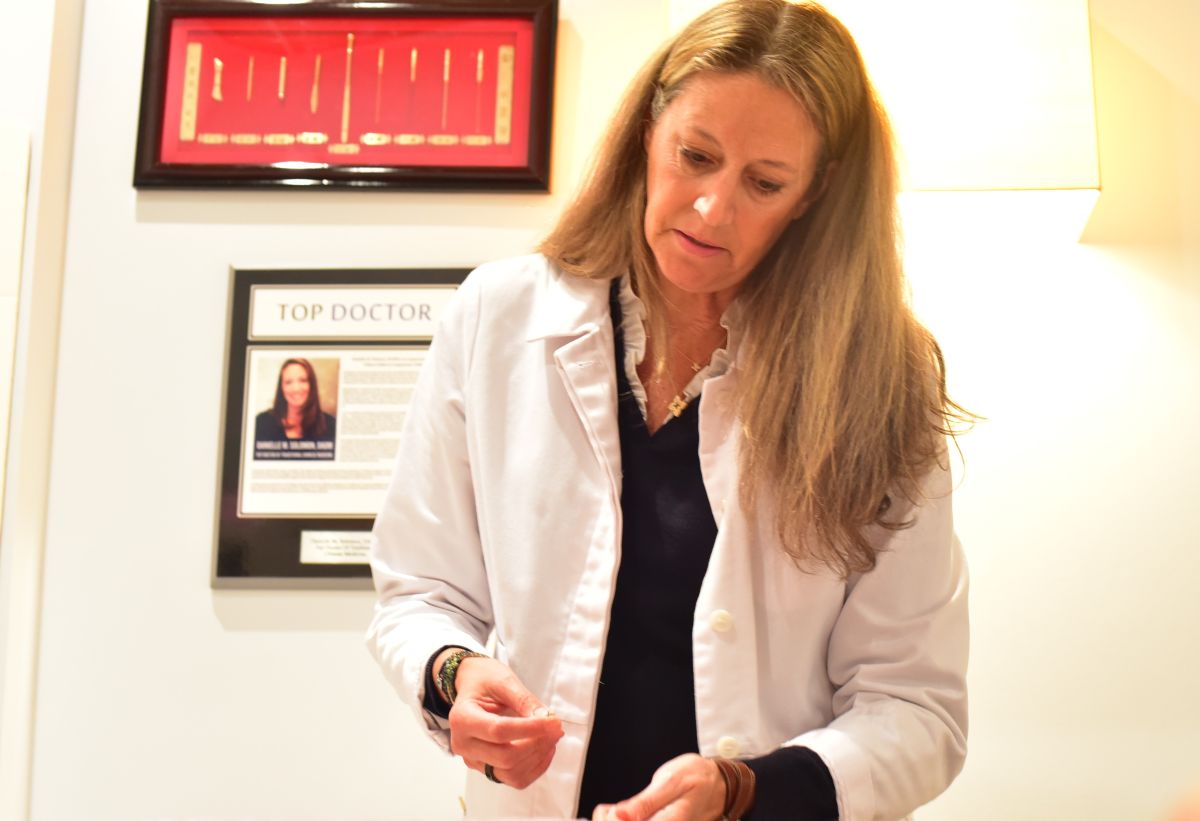
Dr. Danielle M. Solomon brings over 25 years of integrative medicine experience to her Tribeca practice. With a Doctorate in Chinese Medicine from Pacific College and advanced training at the Tibetan Hospital for Traditional Chinese Medicine in Beijing under Dr. Wang Ju-yi, she combines deep expertise with a genuinely personalized approach.
Her practice offers more than acupuncture. Dr. Solomon is a Board Certified Herbalist who integrates multiple healing modalities—gua sha, stone medicine, herbal formulas, and facial esthetics—customized to each patient's needs.
Women's health from puberty through menopause is her speciality, and she understands how hormonal changes affect skin at every stage of life.
Patients consistently describe the experience as spa-like, a welcome contrast to clinical medical settings. The 5-star Google reviews reflect what happens when genuine expertise meets attentive, individualized care.
Whether you're curious about cosmetic acupuncture, ready to reduce your filler dependence, or simply want healthier skin through natural methods, a consultation with Dr. Solomon can help you understand what's possible for your specific situation.
Book your appointment at Acupuncture in Tribeca and discover what skin longevity looks like when it's built on your body's own regenerative capacity.


Comments